
Find Tarrant Residents by Clue
Tarrant County does not keep one public roll of every resident. A useful search begins with the kind of fact you need to test. An owner name or street address fits the Tarrant Appraisal District parcel search. A transfer or a legal description fits the County Clerk's Official Records Search. A registration match belongs in the voter tool. Older family work often belongs at the Fort Worth History Center or Tarrant County Archives. Each source answers a narrower question, which is why a match should be checked against a second record.
Parcel cards identify taxable ownership, not everyone living at a site. Voter results identify a registration match, not a household census. A deed can identify parties to a transfer, but it does not prove a party still lives nearby. Keep the record date, the exact spelling searched, and the identifier returned. Those small notes make a later comparison much more reliable.
- Search Tarrant Appraisal District Property Search by an owner name or property address, and note the situs address separately from the tax mailing address.
- Use CAID to place the parcel in its city, ZIP, precinct, and surrounding parcel context.
- Check Tarrant County Voter Lookup only when you have the required identity details and need to verify a registration match.
- Carry an instrument number or legal description to the Official Records Search for the recorded document.
- For a past household, compare the closest surviving city directory year with census, newspaper, or archive material.
Note: A missing match can reflect a protected record, an unindexed year, a spelling difference, or a record held only at the custodian.
Tarrant Resident Records Offices
The principal countywide starting points are separate offices with different duties. The County Clerk maintains real-estate records, probate material, marriage licenses, and other county records. TAD maintains taxable parcel data. Elections maintains registration records. The Fort Worth History Center and County Archives hold older local collections. For a whole named street, use the address-focused steps in the Tarrant street directory rather than treating these office summaries as a street roster.
Tarrant County Clerk
Real Estate Records, Room B20
100 W. Weatherford Street, Fort Worth, TX 76196
Tarrant Appraisal District
Taxable parcels, owner fields, situs addresses, and legal descriptions
Tarrant County Elections
2700 Premier Street, Fort Worth, TX 76111
817-831-8683, Monday through Friday, 8 a.m. to 5 p.m.
Tarrant Parcel Cards by Address
TAD is the current-address layer for this residents directory. Its search can use an account number, geo reference, owner name, owner address, property address, property city, legal description, subdivision, site number, and other categories. The result list exposes the account, georeference, property address and city, primary owner, and market value. The expanded card adds the legal description, state code, instrument, subdivision, neighborhood code, map links, and mailing information.
A situs address is where the parcel sits. A primary owner address is where tax notices go. They can match, but a post-office box, business address, or address in another city is also possible. The distinction matters when comparing a Tarrant residents result to a deed or voter record.
| TAD search control | Use in a Tarrant search |
|---|---|
| All Categories | Choose fields such as Owner Name, Property Address, Geo Reference, Legal Description, Property City, or Subdivision Name. |
| Property type | Residential, Commercial, Mineral, or Personal Property. |
| Enter Your Search | Enter the address, name, account, or legal-description term suited to the selected category. |
| Export and page size | Export All or Export Page as Excel or text; result pages offer 25, 50, or 100 rows. |
The TAD search screen shows the categories and parcel-result layout used for an address-led search.
CAID complements the parcel card by showing the mapped parcel and nearby jurisdiction layers, rather than replacing the owner and instrument fields.
Tarrant Voter Records Need Context
The Tarrant voter tool accepts last name, first name, date of birth, and State Voter ID. A result can show voter identifiers, name, address, status, precinct, districts, and an election-history link. It is useful for confirming an identity after a name and address have already been narrowed. It is not a search by street or a complete list of occupants at an address.
Texas law protects certain voter information. Address Confidentiality Program participants, people with qualifying confidentiality, and people suppressed from the web display may not appear normally. The Elections office is the proper fallback for a privacy voter or an online-lookup issue. Do not infer that a parcel has no residents because no voter result appears.
The Tarrant County Voter Lookup form shows the name, birth-date, and voter-ID fields required for an individual lookup.
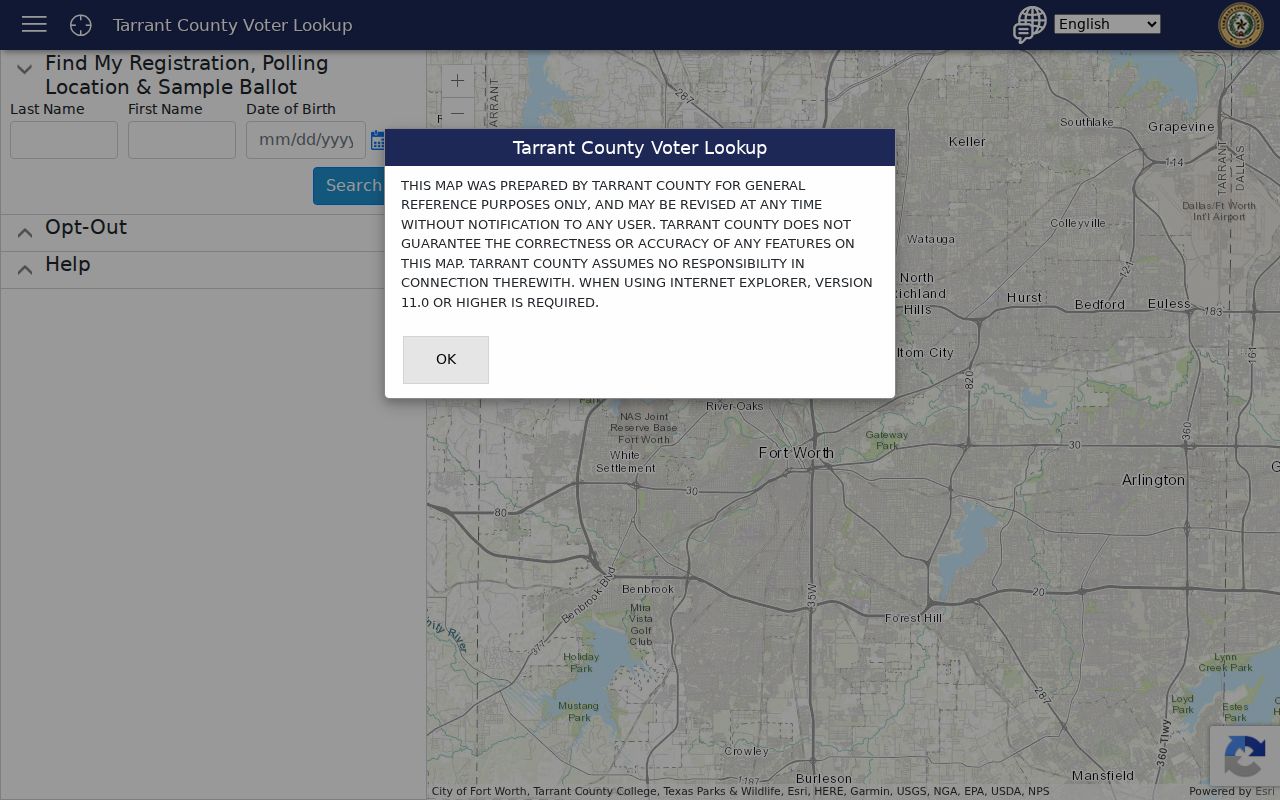
The form is one confirmation channel. The parcel card, deed image, and voter match should remain distinct records with distinct limits.
Tarrant Deeds Tie Names to Land
The Clerk's Official Records Search is the bridge from a parcel clue to a recorded instrument. Its term field can search grantor or grantee names, a subdivision, document type, or document number, with a recorded-date range. Index Only is best for named indexed parties. OCR can help when a legal-description phrase or text within a document is the lead, but OCR can misread names and should be checked against the image.
Use a TAD instrument reference as a lead, not as proof that the document is a deed. Open the record and capture the grantor, grantee, date recorded, document number, document type, and legal description. Unofficial online copies are available after account registration. The Clerk also offers counter, kiosk, mail, and certified-copy paths. Copies are listed at $1 per page plus $5 for certification.
The Tarrant Official Records Search supplies the name, document, date, and text-search paths behind this part of the residents directory.
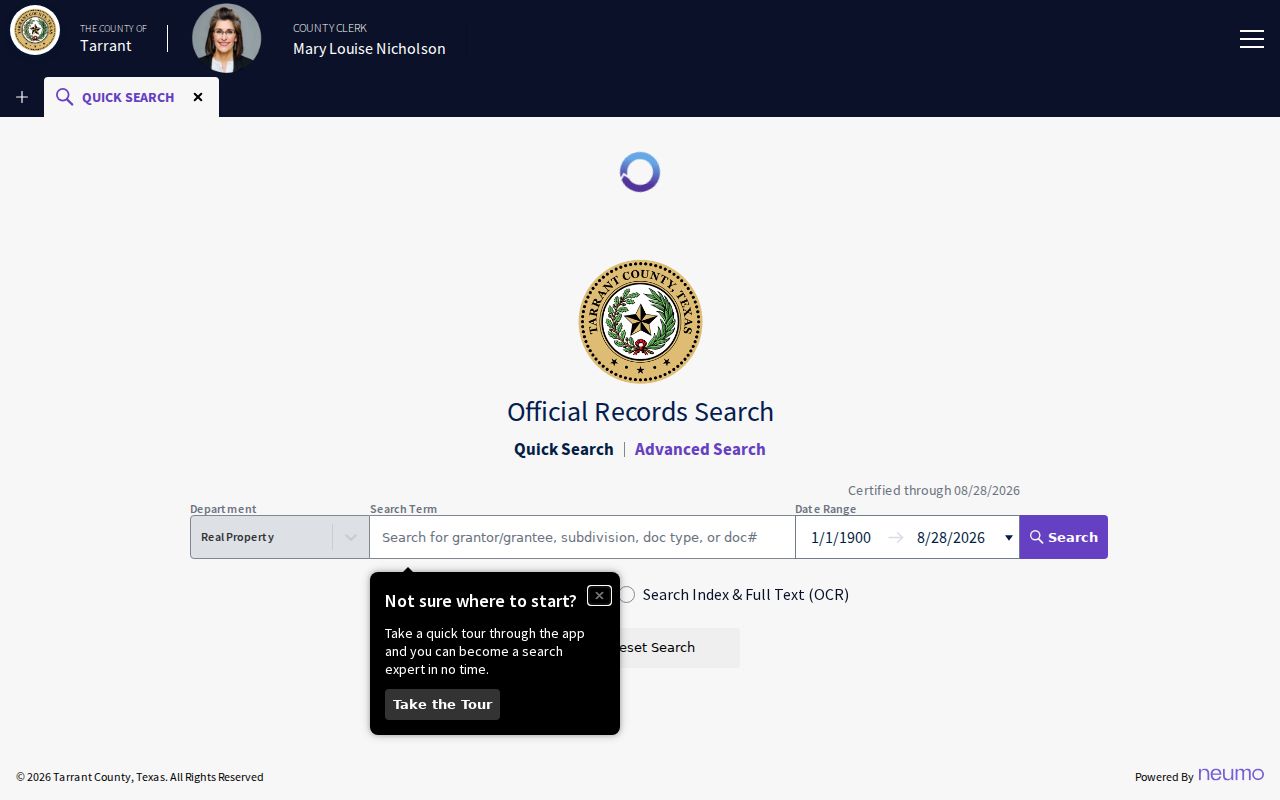
The index can identify a filing, while the image and the clerk remain the source for confirming what the filing actually says.
Current Tarrant Resident Sources
Current sources do not have the same coverage or meaning. A residents directory search is stronger when the result is described precisely: taxable owner, registered voter, party to a document, court party, or historic directory listing. The Tarrant resident lookup has the one-person verification path when a name is the starting point.
| Tarrant source | Best identity clue | Custodian | Access channel |
|---|---|---|---|
| TAD parcel card | Taxable owner, situs, mailing address, legal description | Tarrant Appraisal District | Online search, export, and map |
| Voter Lookup | Registration match, status, address, precinct, districts | Tarrant County Elections | Name, date of birth, or voter-ID search; protected records may be suppressed |
| Official Records | Grantor, grantee, instrument, and recorded legal description | Tarrant County Clerk | Online index, registered image access, counter, or mail copy request |
| Tax account | Owner name/address and current account detail | Tarrant County Tax Office | Public account portal |
| Community organization record | Association boundary and public contact, not membership | Fort Worth Community Support | Address association layer or direct confirmation |
Tarrant Courts Need Verification
A court result is a record of a proceeding, not a current-address record and not a finding about a person. Fort Worth Municipal Court has a current-docket search by defendant, room, time, or case number. County Courts at Law, Probate Courts, District Courts, Justice Courts, and municipal courts have separate responsibilities. The statewide re:SearchTX repository can search cases, filings, text in documents, and hearings after account registration, but coverage varies by court and e-filing date.
Search by party name only to create a lead, then narrow by court, date, case number, and case style. A clerk can provide the record-access path for the file. Sealed, juvenile, expunged, adoption, and protected material remains unavailable or redacted. The statewide report cited in the research describes electronic records dating back to 2016 and excludes criminal case records in that account, so local custodian checks still matter.
The re:SearchTX landing page shows the statewide search environment used for electronic court records.
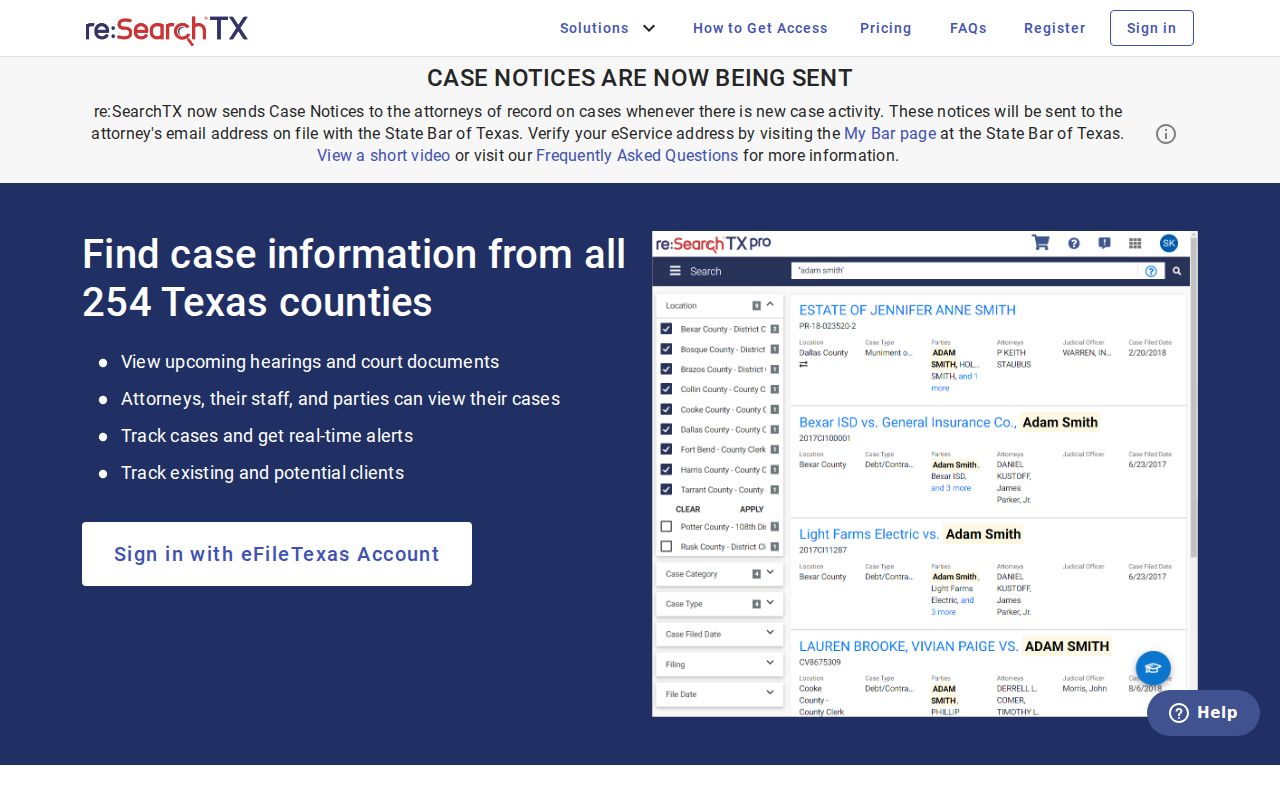
A case number and the appropriate clerk are more dependable than a name-only screen result when a document must be checked.
Tarrant Vital Indexes Differ
Birth, death, marriage, and divorce records have different custodians and access rules. The Tarrant County Clerk is local registrar for births and deaths in 28 cities and eight precincts and maintains county marriage licenses. Texas DSHS provides statewide birth and death records and marriage or divorce verifications. The Tarrant County District Clerk is the local source for divorce case files and decrees.
Texas Government Code §552.115 makes birth records public after 75 years and death records public after 25 years. DSHS identifies digital birth indexes from 1925 forward and death indexes from 1965 forward, with older microfiche beginning in 1903. A verification is not the same thing as a certified license or decree. Recent certified records have eligibility and identification rules, so begin with the custodian and the event type.
Texas DSHS vital-record applications list the official forms for certificates, verifications, adoption, paternity, and correction requests.
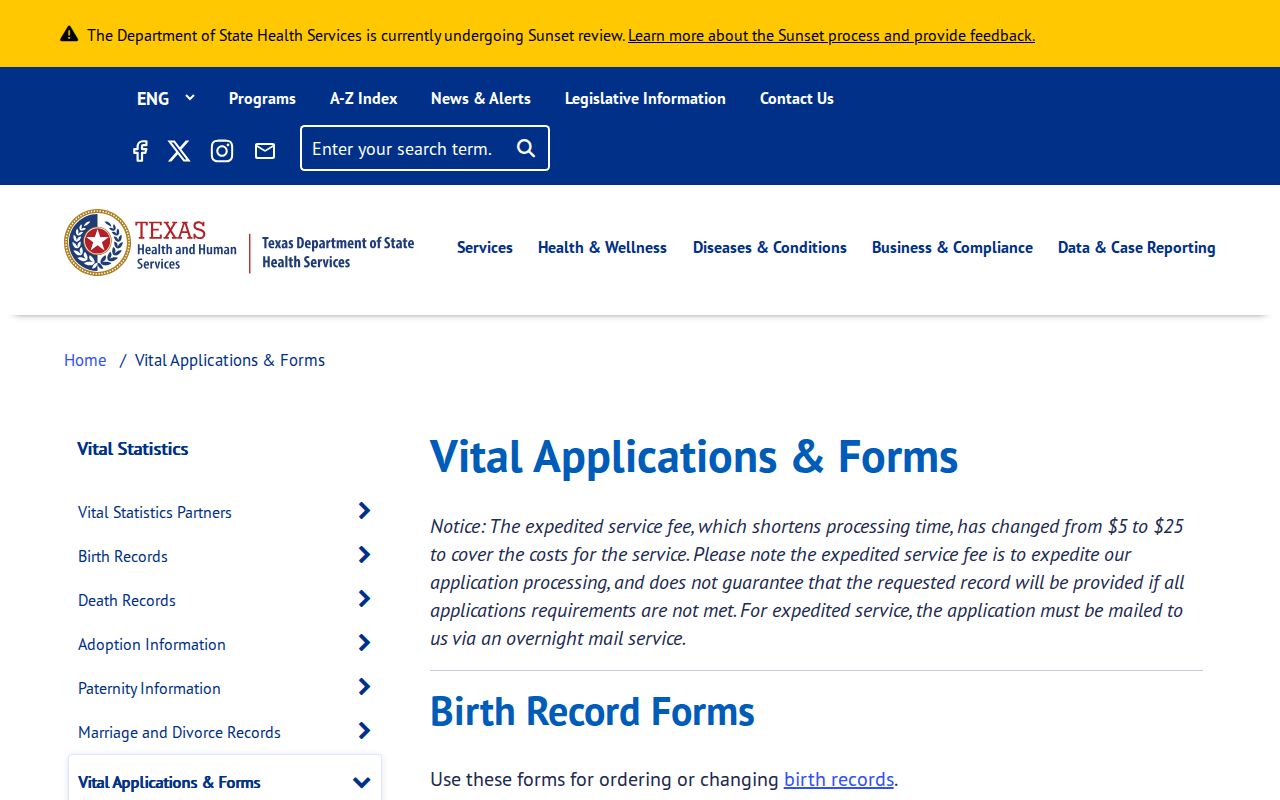
The application page is a request route, not proof that every record category is open to every requester.
Tarrant Requests When Portals Stop
Not every Tarrant record is indexed online. The Texas Public Information Act, Texas Government Code chapter 552, permits written requests by mail, email, in person, fax where available, or an online portal. A governmental body generally must respond promptly. When it claims an exception, the Attorney General ruling process is generally due by the tenth business day. Ask for the specific record, date range, case number, instrument number, or address instead of asking an office to identify a person for you.
Tarrant County's portal is one option. The County Clerk's real-property copy route also includes public terminals, Room B20/B30 assistance, and mail requests. A library or archive may be the better channel when the question is historical. The request route does not override a statute that protects a vital record, a voter, a sealed case, or an Address Confidentiality Program participant.
The Tarrant County public-information portal is an online starting point for a request to the relevant county department.
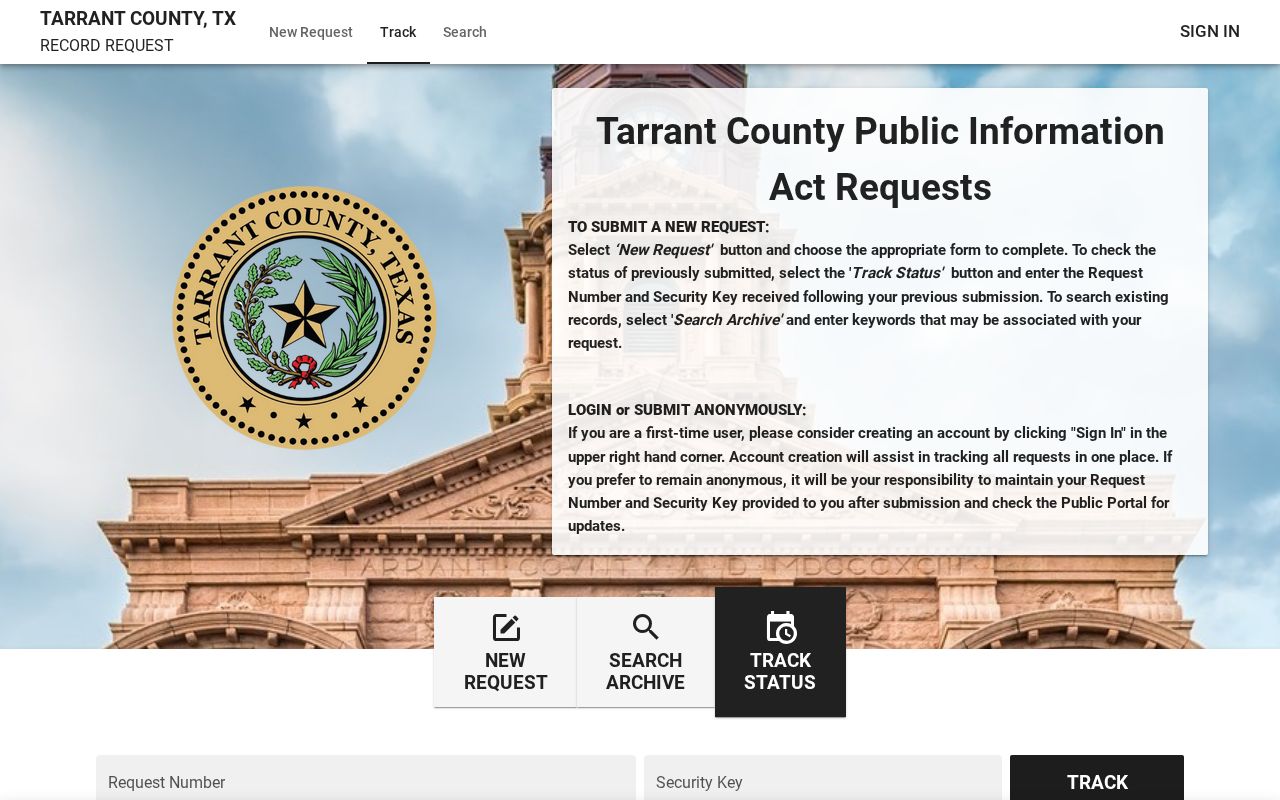
A focused request with a known record identifier gives the receiving office a clearer way to locate the material.
Tarrant ZIPs Cross City Boundaries
Tarrant County contains 41 incorporated areas, so a postal city label is not the same thing as a municipal boundary. The county's GIS can show ZIPs, city limits, precincts, and parcel layers together. That comparison is especially useful where a parcel or a TAD legal description indicates a city-boundary split. It is a local geography issue, not an error to be guessed away.
The county ZIP service describes its polygons as sourced in December 2014, while the county ZIP and voting-precinct map is effective January 1, 2026 and may be revised. Use the map for context, then use the USPS address lookup for the delivery ZIP. ZIP-wide public resident results are not offered as a general county portal feature. The Tarrant ZIP code directory separates these map, postal, and address questions.
Tarrant Privacy Sets Limits
Several gaps in a residents directory are intentional. The Texas Address Confidentiality Program provides qualifying people with a substitute mailing address and forwarding. Texas Election Code §13.004 and Government Code §552.1175 protect specified voter and personal information. Clerk document redaction covers Social Security numbers, federal tax IDs, dates of birth, and driver-license numbers. Ordinary utility accounts and general motor-vehicle address information are not a public household directory.
Lawful use. Tarrant records can support family history, estate research, consumer safety, and civic questions, but never use an address or record to stalk, threaten, harass, or harm someone.
When a public record is wrong, preserve its URL, access date, and record number, then contact the actual custodian. TAD handles a parcel-card issue, Elections handles a registration issue, and the Clerk handles a recorded-document issue. One office cannot correct another office's file.
Tarrant's 1876 Records Break
Tarrant County was established in 1849, but the courthouse fire of March 29, 1876 destroyed most early deed and district-court records. Some probate material survived, and later abstracts, transcriptions, re-recordings, and reconstructed books help bridge the loss. An empty result before that break is not proof that a person or transfer did not exist.
The County Archives holds historic ledgers and finding aids, while the District Clerk reported an imaging effort for historical files spanning 1876 through 1950. These layers do not have the same coverage as a live portal. For an older family trail, compare archive material with directories, tax lists, newspapers, cemetery work, and probate rather than expecting one modern index to settle the question.
Historical Tarrant Resident Directories
Fort Worth's printed-directory trail begins with an 1877 volume and continues through selected years into 1989, with genuine gaps. The 1914 Morrison & Fourmy directory is digitized through the Portal to Texas History. Tarrant Archives holds Polk, Cole, suburban, and Wallace Street Guide material, while the History Center has directories, yearbooks, maps, newspapers, and genealogy databases. A directory entry is dated evidence, not a statement of continuous residence.
- Parcel
- A taxable land unit identified by an account, map reference, and legal description.
- Index
- A finding tool that points to a document or record; it is not always the record image itself.
- Resident roll
- A practical label for a source that identifies a person in a defined public role, such as owner or registered voter.
- Criss-cross directory
- An address-oriented directory section that can lead from a street number to a listed occupant in that edition.
The collection years, publishers, reading-room routes, and address-oriented volumes are covered in the Tarrant city directory collections. Compare an alphabetical entry with the street section, a census year, and a deed or tax record before drawing a household conclusion.
Compare Tarrant Resident Sources
Official records and commercial people-search categories do different work. Official sources identify their custodian, field limits, record date, and correction route. Commercial services often combine public filings, marketing data, purchased datasets, and address associations into a paid result. Their matching methods and update cycles do not control the Tarrant source record.
| Question | Official Tarrant route | Why it matters |
|---|---|---|
| Who owns this taxable parcel? | TAD parcel card | Shows the current tax-record context and legal-description lead. |
| Who signed the recorded transfer? | County Clerk instrument image | Confirms document type, parties, and recording date. |
| Is this a registered voter match? | Tarrant Voter Lookup or Elections contact | Shows a defined registration result with privacy limits. |
| Who was listed at an old address? | Directory, archive, and library collections | Preserves the date and edition instead of implying a current match. |
Use the source that owns the fact, and ask that custodian to verify or correct it. That is the dependable boundary for a Tarrant residents search.